


The carbon consultant: their role and responsibilities
Collect the data
Data collection is one of the carbon consultant’s primary responsibilities. This involves gathering all relevant information on the company’s greenhouse gas emissions. The consultant collaborates with all departments within the organization to obtain accurate readings, invoices, and internal reports.
This step requires particular attention to ensure the accuracy and completeness of the data collected. Rigorous data collection forms the basis for a precise quantification of emissions for the creation of a carbon footprint and allows for the development of effective reduction strategies tailored to the specific characteristics of the company.
Quantifying GHG emissions
Analyze the results
Analyzing the results is a key step for the carbon consultant after quantifying greenhouse gas emissions. It involves examining the data obtained to identify the main sources of greenhouse gas emissions. The consultant compares the results with the company’s environmental objectives and industry averages. This analysis helps to understand the trends and the most significant sources of emissions.
By assessing current performance and identifying weaknesses, the carbon consultant can formulate tailored recommendations. This step is essential for developing effective reduction strategies and preparing a detailed report for stakeholders.
Propose solutions for reducing CO2
After analyzing the results, the carbon consultant proposes CO2 emission reduction solutions tailored to the company’s specific needs. These solutions may include improving energy efficiency, adopting clean technologies, optimizing industrial processes, or transitioning to renewable energy sources.
The consultant develops a detailed action plan with clear objectives, performance indicators, and an implementation timeline. They may also recommend training to raise employee awareness of sustainable practices. These solutions aim to reduce the company’s carbon footprint while generating savings and improving its competitiveness.
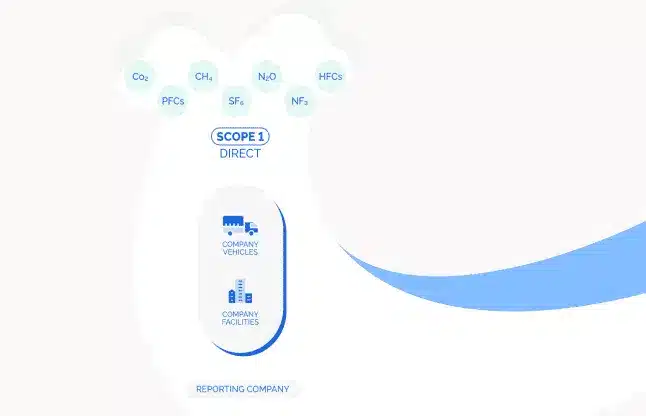
Each scope of the carbon footprint is distinct in terms of its nature, its sources of emissions, and its calculation methods.
Carbon footprint expert: an indispensable role
The carbon consultant, internal to the company
The company’s internal carbon consultant is an employee dedicated to managing greenhouse gas emissions. They work closely with various departments to collect data, analyze results, and propose solutions for reducing CO2. With in-depth knowledge of internal operations, they can quickly identify inefficiencies and opportunities for improvement.
Bringing this expertise in-house allows for greater responsiveness and a smoother integration of environmental objectives into the company’s overall strategy. Furthermore, it fosters a culture of sustainability by involving all employees in the environmental approach.
The carbon consultant, external to the company
An external carbon consultant brings specialized expertise and an objective perspective to the company. Hired for specific projects, they offer specialized skills in greenhouse gas emissions management and regulatory compliance. This consultant collaborates with internal teams to collect data, quantify emissions, analyze results, and propose reduction solutions.
His diverse experience, gained with multiple clients, allows him to offer innovative practices. Engaging an external consultant is particularly beneficial for companies lacking the necessary internal resources. They thus benefit from high-level expertise.
Carbon footprint consultants, whether internal or external to organizations, are essential in helping companies measure and reduce their greenhouse gas emissions. Their expertise enables them to identify the main sources of emissions, propose effective reduction solutions, and ensure regulatory compliance. This allows companies to strengthen their environmental commitment and improve their competitiveness.