
What are carbon quotas?

Carbon allowances are limits on greenhouse gas (GHG) emissions allocated to companies to reduce their environmental impact. They work on the “cap-and-trade” principle, where companies can buy or sell emission allowances. This system encourages the gradual reduction of emissions and investment in cleaner technologies.
Carbon market: what is the community emissions trading system?

The european union emission trading system (EU ETS) is a european mechanism aimed at reducing greenhouse gas emissions by limiting the number of emission allowances available to companies. It operates on the “cap-and-trade” principle, where companies can buy and sell emission allowances while adhering to a fixed cap that progressively reduces emissions.
How to calculate your carbon footprint?

To calculate your carbon footprint, you need to identify the activities that generate emissions, such as energy consumption, transportation, or food. Then, it is necessary to collect data, such as energy bills or kilometers traveled, and use online tools like those from ADEME or WWF to convert this information into co2 equivalents. These calculators provide an accurate estimate and help target actions to reduce your environmental impact.
What are the differences between the GHG inventory and the carbon footprint assessment?

The GHG inventory is a mandatory tool in france for certain companies, while the carbon footprint assessment is a voluntary initiative. The GHG inventory primarily covers Scopes 1 and 2 (direct and energy-related emissions), whereas the carbon footprint assessment also includes scope 3 (indirect value chain emissions). Finally, the GHG inventory focuses on legal compliance, while the carbon footprint assessment is often used for broader emission reduction strategies and carbon neutrality.
France’s GHG emissions

Greenhouse gas (GHG) emissions in france have decreased by about 20% since 1990, but transportation and agriculture still present challenges. The country relies on nuclear and renewable energy to reduce its emissions while continuing its energy transition. France has committed to achieving carbon neutrality by 2050.
Comparison of GHG emissions: sectors, countries, and energy sources

Greenhouse gas (GHG) emissions vary by economic sectors, countries, and energy sources, with energy and industrialized countries contributing the most. The transition to renewable energy and technological innovations are essential for reducing these emissions, while climate policies play a key role in achieving global goals.
Worldwide GHG emissions by sector : 2026 analysis

The energy sector is the largest polluter, accounting for approximately 73% of global GHG emissions. Transportation and industry follow, with 16% and 21% of emissions, respectively. Agriculture and the building sector also contribute, with 14% and 6% of global emissions.
Comparison of GHG emissions by country

Comparing GHG emissions by country helps identify the largest emitters and distribute reduction efforts, with china and the united states at the top. For country emissions vary widely, with wealthier countries having higher levels than developing nations. Countries like norway, sweden, and costa rica stand out for their ambitious strategies to reduce emissions and promote renewable energy.
All the steps to calculate greenhouse gas emissions
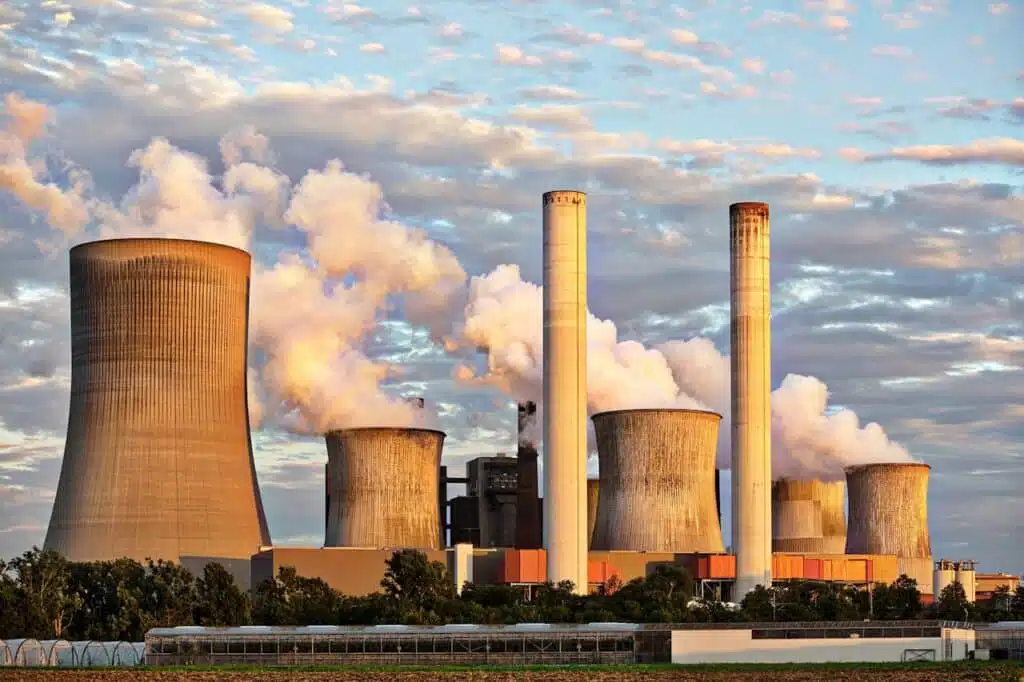
To calculate greenhouse gas emissions, we need to define the scope of emissions, identifying direct and indirect sources (scopes 1, 2 and 3). Next, data must be collected and centralized. Finally, standardized methods, such as the GHG protocol, are used to convert the data into co2 equivalents and analyze the results.
What is carbon accounting? our complete guide

Carbon accounting measures the greenhouse gas emissions generated by a company. It allows tracking and reducing the carbon footprint related to its activities. This comprehensive guide explains the steps and benefits of this approach for businesses.
